


ERP vs Project Management Software in Construction: What Your Projects Actually Need
A contractor finishes a floor. The client says the spec changed three weeks ago. The contractor says nobody told him. The architect pulls up an email. The contractor pulls up a WhatsApp message. Both are dated differently. Both say something different.
And just like that, a documentation gap becomes a ₹15 lakh dispute.
If you’re a project manager or site engineer, you’ve either lived this exact situation or you’ve watched it happen to someone else on site. The work was done. The money was spent. But when it came time to prove what was agreed, what changed, and who approved it nobody had the paper trail.
That’s not a people problem. That’s a systems problem.
So, let’s talk about what ERP and project management software actually do, where each one breaks down on a real construction project, and what needs to sit between them so your projects don’t bleed money every time something goes wrong.
Still managing approvals and change orders across WhatsApp and email? See how Collabworx gives construction teams one structured workspace where every decision, drawing, and document stays traceable. Start a free trial.
What ERP Was Actually Built For
ERP (Enterprise Resource Planning) handles the financial backbone of a construction business. Procurement, vendor payments, payroll, inventory, billing, GST compliance, and financial reporting. For any firm managing multiple projects and crores in cash flow, ERP is non-negotiable.
But here’s what ERP doesn’t do: it doesn’t tell you which drawing revision was active when the slab was poured. It doesn’t record who verbally approved a scope change on site. It doesn’t track whether the change order was acknowledged before the contractor mobilised.
ERP captures what was spent. It doesn’t capture the decisions that led to the spending.
And in a contract dispute, the decisions are exactly what everyone is fighting over.
What Project Management Software Was Built For
Project management tools handle the operational side task assignments, deadlines, drawing versions, approval workflows, progress tracking, and team coordination. They’re built for the work happening between decisions and delivery.
Where ERP looks backward at financials, project management software looks forward at execution. One is a ledger. The other is supposed to be the project’s operating memory.
The problem is that most generic project management tools weren’t designed for the specific complexity of construction multiple companies working in parallel, drawings going through ten revisions, approvals needed from people who are never in the same room, and subcontractors on site who need the right information at the right time without getting access to everything else.
When those gaps exist, project managers fill them with WhatsApp groups and email threads. Which works until it doesn’t.

Where Both Break Down
You’ve probably seen at least one of these play out:
- A subcontractor completes structural work based on a drawing that was superseded two weeks earlier. Nobody told him because the update went on email and he’s not on that chain.
- A change order gets raised verbally on site, work begins, but it never gets formally documented. Three months later, the client refuses to pay for it because there’s no approval record.
- An RFI gets raised, the consultant responds, but the response sits in someone’s inbox and never reaches the foreman. Work proceeds on the wrong assumption.
- A compliance inspection asks for NOC documentation and approval records. The finance team has invoices. Nobody has the actual approval trail.
None of this shows up in the ERP. And most project management tools don’t capture it either because the conversation happened on WhatsApp; the approval happened over a call, and the document was shared on Drive with no version control.
When a claim is filed or an audit begins, you’re reconstructing the project from memory. That’s where disputes get expensive.
ERP vs Project Management Software: Side by Side
|
|
ERP |
Project Management Software |
|
Primary focus |
Financial & resource tracking |
Task, document & team coordination |
|
Built for |
Finance, procurement, accounts |
PMs, site engineers, consultants |
|
Drawing & version control |
Rarely |
Yes, with traceability |
|
Approval workflows |
Limited |
Core feature |
|
Change order documentation |
Not designed for it |
Built for it |
|
Multi-company access |
Not designed for it |
Built for it |
|
Supports contract claims |
Financial records only |
Decisions, approvals, communications |
|
RERA documentation |
Partial |
Full |
The gap between these two columns is where most construction disputes are born.
Why You Can’t Plug One Into the Other
Some firms try to run everything through ERP. One system, cleaner on paper. But ERP isn’t built for the pace of site coordination. You can’t attach a drawing revision to a purchase order and call it version control. You can’t run a change order approval through an invoice module. And you can’t give a subcontractor access to your financial system just so he can confirm the latest structural drawing.
Some teams go the other way and try to replace ERP with project management software. That doesn’t work either. Project management tools generally aren’t built for complex procurement cycles, multi-tier billing, or the financial reporting that auditors and banks require.
These are two different tools solving two different problems. The mistake is expecting either one to do the other’s job. And when teams realise that, the next question is always the same: so what fills the gap?
Some firms try to run everything through ERP. One system, cleaner on paper. But ERP isn’t built for the pace of site coordination. You can’t attach a drawing revision to a purchase order and call it version control. You can’t run a change order approval through an invoice module. And you can’t give a subcontractor access to your financial system just so he can confirm the latest structural drawing.
Some teams go the other way and try to replace ERP with project management software. That doesn’t work either. Project management tools generally aren’t built for complex procurement cycles, multi-tier billing, or the financial reporting that auditors and banks require.
These are two different tools solving two different problems. The mistake is expecting either one to do the other’s job. And when teams realise that, the next question is always the same: so what fills the gap?
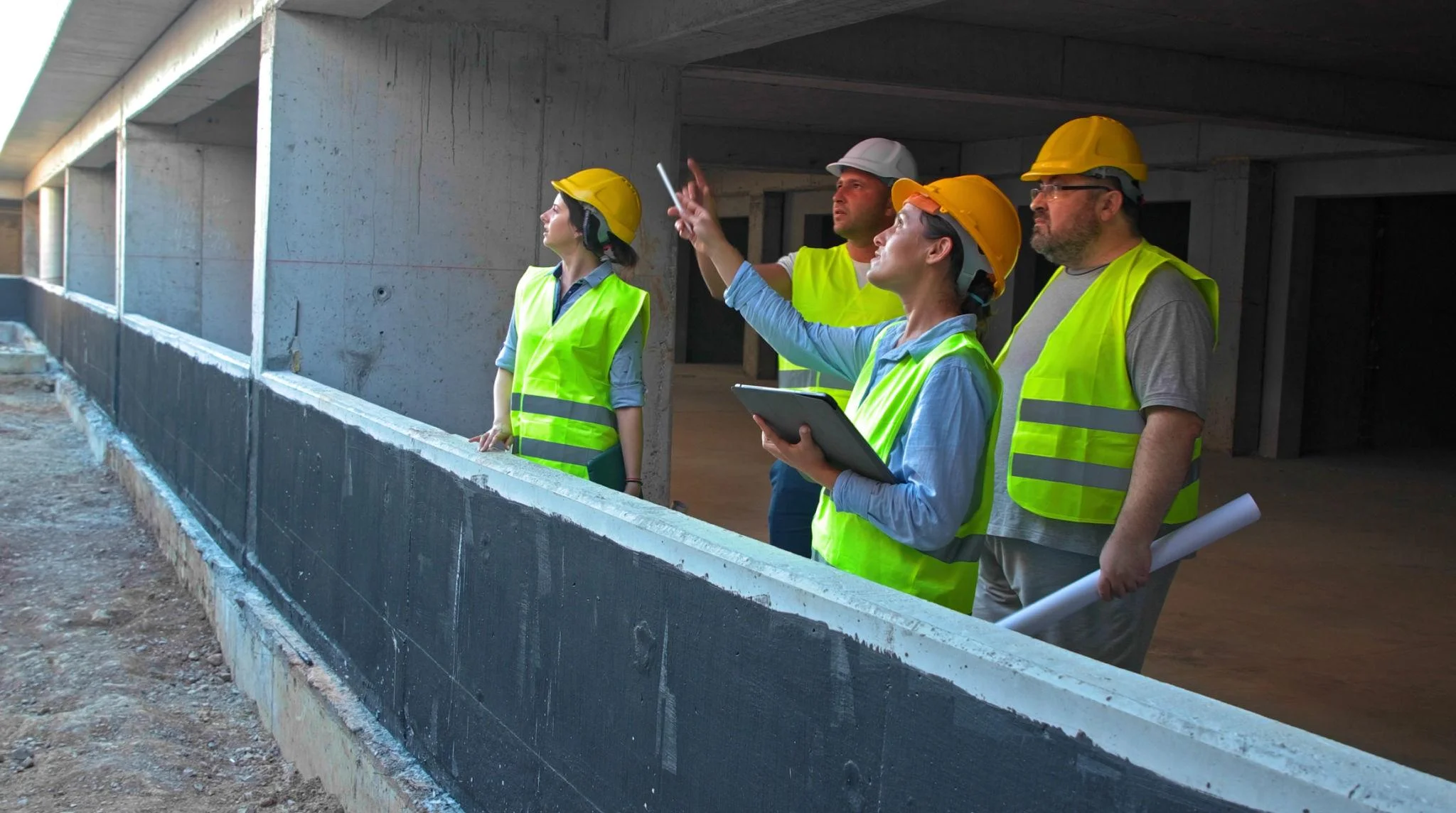
What Sits in the Middle And Why It Matters
The gap isn’t a mystery. It’s the space where drawings get revised without everyone knowing, where change orders get approved without being recorded, and where RFIs get answered without reaching the right person. It’s the space where disputes quietly begin, long before anyone files a claim.
What construction teams actually need is a structured coordination layer that sits between the ERP and the field. Something that keeps every drawing, approval, change order, RFI, and inspection record connected, timestamped, and traceable without touching the financial system.
That’s what Collabworx is built for.
Not to replace your ERP. Not to replace your project management tool. But to make sure that when a claim is filed, when a compliance inspection happens, or when a client disputes a change you have a clean, unambiguous record of what was decided, who approved it, and when.
Every drawing sits with its full revision history. Every approval has a timestamp. Every change order is tied to the conversation that created it. And every stakeholder contractor, consultant, client sees exactly what they need to, and nothing they shouldn’t.
Before vs After: What Changes on the Ground
|
Before |
After |
|
Change orders approved verbally, disputed later |
Every change documented with approval trail |
|
Drawing revisions shared on WhatsApp, version unknown |
One final version, older ones locked |
|
RFIs lost in email threads |
Responses tied directly to the relevant file |
|
Compliance audits mean digging through inboxes |
Timestamped records ready when needed |
|
Disputes decided by who remembers what |
Disputes settled by what was actually recorded |
What changes isn’t effort. It’s clarity. And in construction, clarity is what keeps disputes from becoming losses.
The Bottom Line
ERP and project management software are not competitors. They serve different people, at different stages, for different purposes on the same project.
The real question isn’t which one to choose. It’s whether the gap between them is costing you in rework, in disputes, in claims you can’t defend, and in audits you’re not ready for.
When your financial records and your project coordination records are both clean and connected, something shifts. Disputes get shorter. Audits get easier. And site teams spend less time defending decisions and more time making them.
Want to see what this looks like on a live project?
Start a free trial with Collabworx and see how project managers across India are closing the gap between their ERP and their site reality before the next dispute makes it unavoidable.

 TALK TO US ?