

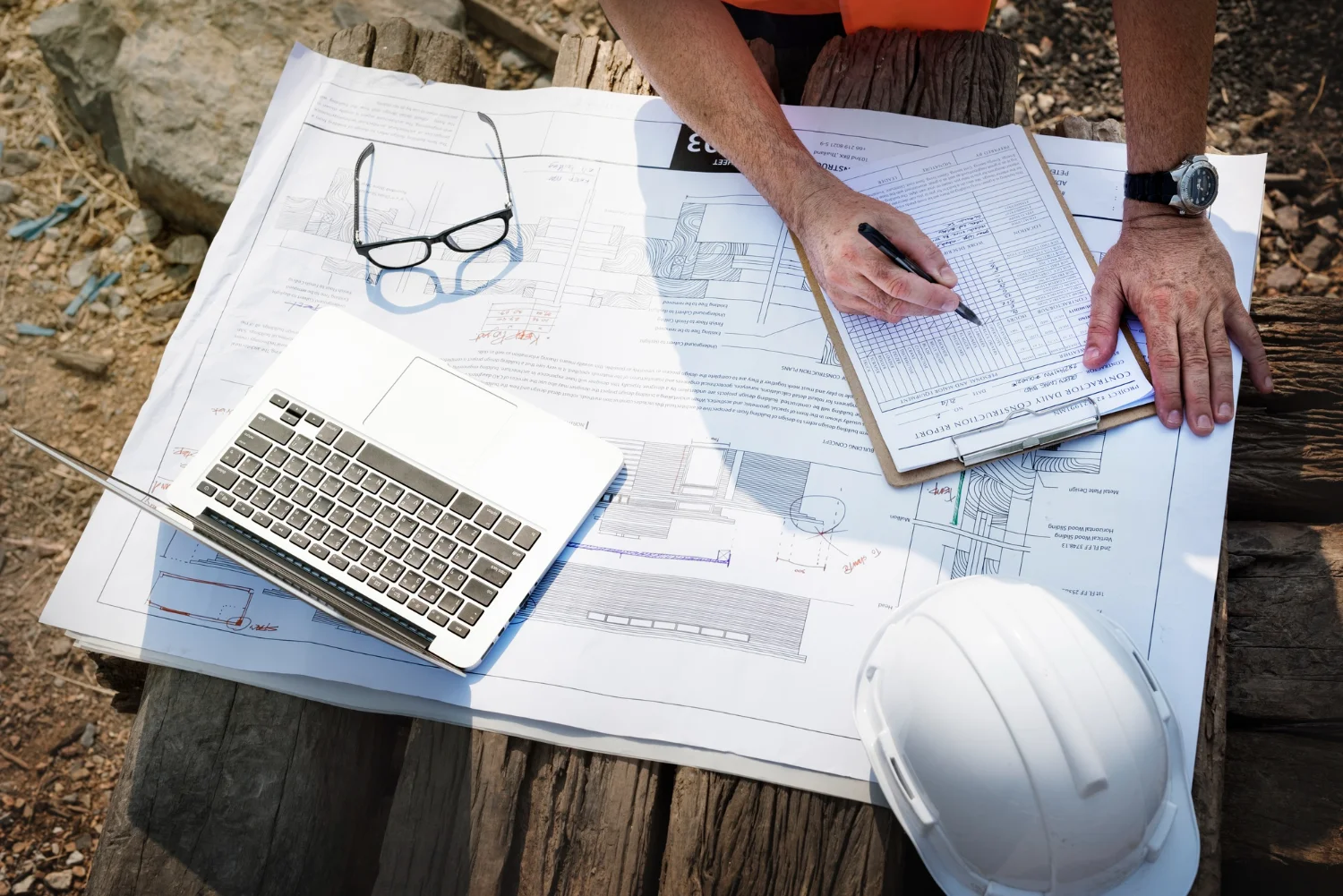
Every construction project generates a stack of documents, but almost all of them appear at intervals. Drawings get issued in revisions. RA bills go out monthly. RFIs surface when something is unclear. The daily progress report works differently. It is the one record a site produces every single day it operates, which makes the full set the closest thing a project has to a continuous memory of what actually happened on the ground.
That is also why a weak DPR quietly costs so much. When the report is filled in from memory the next morning, or copied forward from yesterday with only the date changed, the project loses its most granular record at exactly the point it becomes most useful: verifying a running bill, filing a quarterly RERA update, or explaining a delay months after it occurred.
The point of a strong daily progress report format is simple: turn the record you are already keeping into something usable, instead of leaving it as a box someone ticks each evening.
Still compiling DPRs across a WhatsApp group and a shared Excel sheet at the end of each day? See how Collabworx gives site teams one structured workspace where every daily report, photo, and material log stays timestamped and traceable. Start a free trial.
What a DPR Actually Records
Underneath the site-to-site variations, a construction DPR covers a fixed set of fields. This is the daily progress report format most Indian sites work from, and it doubles as a ready template you can lift directly:
|
Section |
What it captures |
|
Header |
Project name, date, day, weather, and report author |
|
Manpower |
Worker count by trade (masons, helpers, electricians, operators) and hours worked |
|
Work completed |
Specific activities with quantities or percentages, listed by location |
|
Materials consumed |
Cement bags, steel tonnage, aggregate, bricks, and other issued stock |
|
Machinery deployed |
Equipment on site and hours of operation |
|
Issues and instructions |
Shortages, weather stoppages, absenteeism, and site instructions received |
|
Site photographs |
Dated images tied to the day’s work |
|
Next day plan |
Planned activities and expected labour |
The detail in the work completed row is what separates a useful report from a filler one. An entry that reads “2nd floor slab casting, 60 percent complete” tells you where the project stands. An entry that reads “slab work done” tells you nothing three months later.
Why the Format Matters on an Indian Site
The DPR is quietly load-bearing across the entire project lifecycle:
- Payment claims: Running bills backed by daily records, material logs, and dated photos move through verification with far less back and forth.
- RERA reporting: Promoters filing quarterly project updates with MahaRERA need a defensible progress trail rather than reconstructed estimates.
- Delay and EOT claims: When a timeline slips, dated records of weather, material shortages, and instructions are what support an extension of time.
- Compliance and handover: A complete daily trail supports the paperwork behind milestones like the fire NOC and the occupancy certificate (OC), and it stays useful as a reference through the defect liability period (DLP).
Where Most DPRs Fall Short
Even sites that file a report daily lose its value in predictable ways:
- Written from memory the next morning, once the day’s detail has already blurred
- Vague descriptions carrying no quantities or percentages
- Material consumption left off, which breaks cost tracking
- Photos missing, or stored separately from the entry they belong to
- One report, several forwarded copies, and no single version anyone can trust
Each of these turns a daily record into something you cannot lean on when it counts.

From a Daily Habit to a Connected Record
This is where the DPR in construction stops being a standalone habit and becomes part of a connected record. Collabworx lets site teams capture the daily report on mobile as the day happens, attach photos directly to the entry, and log manpower and materials against the correct project folder. Each report is timestamped and version controlled, so there is one record everyone works from rather than several floating copies.
Because it sits alongside your ERP and project management tools as a structured coordination layer, the DPR feeds the same common data environment (CDE) as your drawings, approvals, and RFIs. When a running bill, a RERA update, an OC application, or a delay claim needs backing, the daily trail is already there, connected and ready.
Collabworx works alongside how you cost and schedule a project, keeping the daily record structured enough to hold up whenever someone asks what happened, and when.
The Bottom Line
The daily progress report is the most routine document on a site and, across a project, one of the most consequential. A clear format, filled the same day, backed by photos and material logs, turns a daily chore into a record that supports payments, compliance, and every claim you may need to stand behind.
The teams that treat the DPR as infrastructure, rather than a formality, are the ones who spend less time reconstructing the past and more time building.
Want a DPR format your whole site can actually follow?
Start a free trial with Collabworx and give every daily report one structured home, connected to the drawings and approvals it depends on.
Talk to our team to see how construction firms across India are turning daily reports into a traceable project record.

 TALK TO US ?