
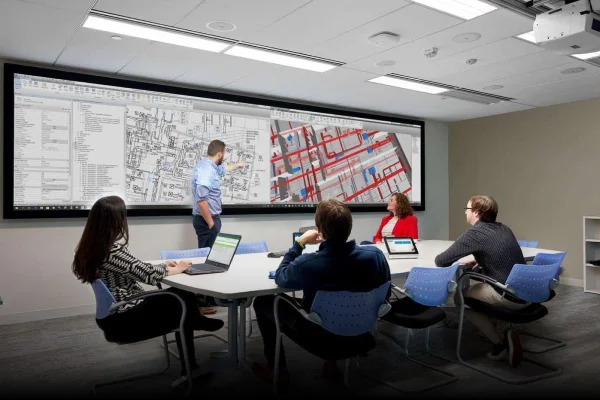
If you’ve ever worked on a construction project, you already know it’s not just about concrete and blueprints it’s about coordination. Dozens of people, parallel timelines, changing drawings, and approvals that never seem to end. Somewhere between emails, WhatsApp chats, and Google Drive folders, one missed update can turn into a costly mistake.
And that’s the thing; construction teams don’t fail because they lack effort. They fail because information gets lost in the noise.
Let’s talk about the top five collaboration challenges that most construction teams face, and more importantly how to fix them.
1. Scattered Communication Channels
Let’s be honest, most project communication is chaotic. One update goes on WhatsApp, another on email, someone drops a photo in a random group, and the client replies three days later in another thread. By the time everyone pieces things together, someone on-site is already working on an outdated plan.
It’s not that people aren’t talking, it’s that they’re talking everywhere.
Why it’s a problem:
- Context gets lost between multiple apps.
- No single record of decisions.
- Delays pile up because no one knows which message is final.
How to fix it:
Create a single communication thread for each project where every discussion, file, and update lives together. When conversations stay connected to files and folders, you don’t have to scroll through hundreds of messages to find what changed. Everyone stays on the same page, literally.
Why it’s a problem:
- Context gets lost between multiple apps.
- No single record of decisions.
- Delays pile up because no one knows which message is final.
How to fix it:
Use a system that automatically tracks versions and locks old files. Collabworx, for example, uses a Sequential and Structured Folder System so there’s always one clear latest file. Each new upload fits in order, like steps in a timeline. No guessing, no confusion. You just pick the final one and build.
For growing firms looking for a practical construction team collaboration tool in India, the focus should be on structure and traceability, not flashy dashboards. What matters most is how easily teams can share the right version at the right time.
3. No Folder Discipline
If you’ve ever tried to find a single file buried in ten project folders, you know the pain. Some people name files by date, some by drawing numbers, and some by whatever came to mind at the time. There’s no standard, no order and definitely no traceability.
Why it’s a problem:
- Wasted hours looking for documents
- Important files end up in personal drives or chats.
- New team members can’t find what they need.
How to fix it:
Set up a consistent folder structure that everyone follows. Gives each project a defined hierarchy that is built specifically for construction needs. Drawings, site reports, purchase orders, and correspondence each must have its place. You can trace a document back from any stage.
And once teams get used to this system,what you’ll notice is: discipline becomes second nature. You don’t “look for” files anymore; you know where they are. That’s exactly what most Indian builders and contractors are now seeking from a construction team collaboration tool in India; something that feels simple, disciplined, and built around how construction really works on ground.
4. Unclear Accountability and Missed Updates
When things go wrong, the first question everyone asks is, “Who updated this?” or “When did we approve that change?” And often, no one really knows. That’s when the blame game begins.
Construction projects involve too many hands designers, supervisors, vendors, subcontractors and without a proper record, accountability disappears.
Why it’s a problem:
- Changes happen with no visibility.
- It’s hard to know who made the call.
- Mistakes repeat because there’s no audit trail.
How to fix it:
Keep an activity log where every file update, comment, and approval is tracked automatically. In some applications UI, you can see who did what and when without endless follow-ups. This application provides a transparent record of the project’s memory, factual, timestamped, and non-negotiable.
And when accountability is clear, trust improves. Teams stop worrying about finger-pointing and start focusing on getting the job done right.
5. Delayed Approvals and Decision Loops
Approvals in construction can feel like a relay race where the baton never quite makes it to the finish line. One email sits unread, another file is waiting for review, and someone important is out of town. Before you know it, a week’s delay turns into a month.
Why it’s a problem:
- Decisions get lost in long email chains.
- Stakeholders don’t have real-time visibility.
- Project timelines stretch unnecessarily.
How to fix it:
Use a shared dashboard that shows what’s pending, what’s approved, and what needs attention. Some applications centralise these loops so every stakeholder from the client to the site engineer knows the project’s pulse.
This ensures that there is no more guessing who’s holding things up. No more endless “just checking in” messages. Approvals move faster when everyone is literally looking at the same screen.
Why These Challenges Keep Coming Back
Even after investing in tools and training, many companies still find themselves stuck in the same cycle: scattered files, miscommunication, slow decisions. The truth is, most systems were never designed for the rhythm of construction work. They work fine for a few people but break down the moment 10 or more stakeholders join in.
That’s why Collabworx was built differently by people who have actually managed real projects, not just software teams. Its entire design revolves around how construction teams actually operate: fast-moving, multi-layered, and deeply interconnected.
The Collabworx Way
At the centre of Collabworx lies one principle: structure that beats stress. When data is stored in order, updates stay traceable, and files follow a clear path, everything else falls into place.
Here’s how that plays out day to day:
- You upload a file once, and everyone sees it.
- Conversations stay attached to the document they’re about.
- The system maintains sequence no duplicates, no overlap.
- You can onboard a new team member, and they’ll instantly know where to find what.
And this isn’t just about saving time. It’s about peace of mind. When there’s no confusion, people work better, faster, and more confidently.
Summary Table
|
Challenge |
Impact on Projects |
Solution |
|
Scattered Communication Channels |
Missed updates, unclear instructions, and delayed decisions |
Centralise communication, one thread per project for files, updates, and context |
|
Version Conflicts & File Chaos |
Costly rework and outdated plans used on-site |
Maintain a structured version control system so only the latest file is active |
|
No Folder Discipline |
Wasted hours and lost traceability |
Standardise folder structures and naming conventions for every project |
|
Unclear Accountability & Missed Updates |
Confusion about who made changes and when |
Use transparent activity logs with timestamps and user trails |
|
Delayed Approvals & Decision Loops |
Bottlenecks and stalled timelines |
Real-time approval dashboards for faster sign-offs and visibility |
Building Smarter, Together
Construction will always have challenges. But chaos doesn’t have to be one of them.
When communication, files, and accountability live under one roof, collaboration feels lighter. People stop chasing information and start focusing on what they do best: building.
That’s what Collabworx stands for: a shift from scattered chaos to structured clarity. Built by people who’ve been in the trenches, it’s not another “app.” It’s the way construction teamwork should have been all along.
So before your next project begins, ask yourself one thing: do you want another round of confusion, or do you want control from day one?
If it’s the latter, maybe it’s time to give Collabworx a try. Book a demo with us, and you will see how we can help you streamline your workflow in the best way possible.
 TALK TO US ?