
A Simple Guide for Indian Projects
Construction projects often look organised on paper. Drawings are named, folders exist, and timelines feel clear. But once work begins, things shift quickly. But the moment the first revision hits, three different “final” drawings can quietly start circulating. Instead of one source, updates begin to move in different directions.
Revisions arrive late, approvals move across email threads, site teams work with whatever they last received, and vendors ask for files that were already shared.
And slowly, information spreads across WhatsApp, inboxes, personal drives, and printed sheets.
That’s where most construction problems start.
Not because people aren’t coordinating.
But because information isn’t staying in one place.
This is exactly what a Common Data Environment (CDE) is meant to solve. Especially for Indian construction projects involving multiple contractors, consultants, and compliance requirements, a CDE is less about technology and more about discipline.
A CDE works best when backed by the right system. Find out how Collabworx enables secure, traceable project environments built for compliance and multi-company coordination.
Let’s break it down in simple terms.
The Problem a CDE Is Trying to Fix
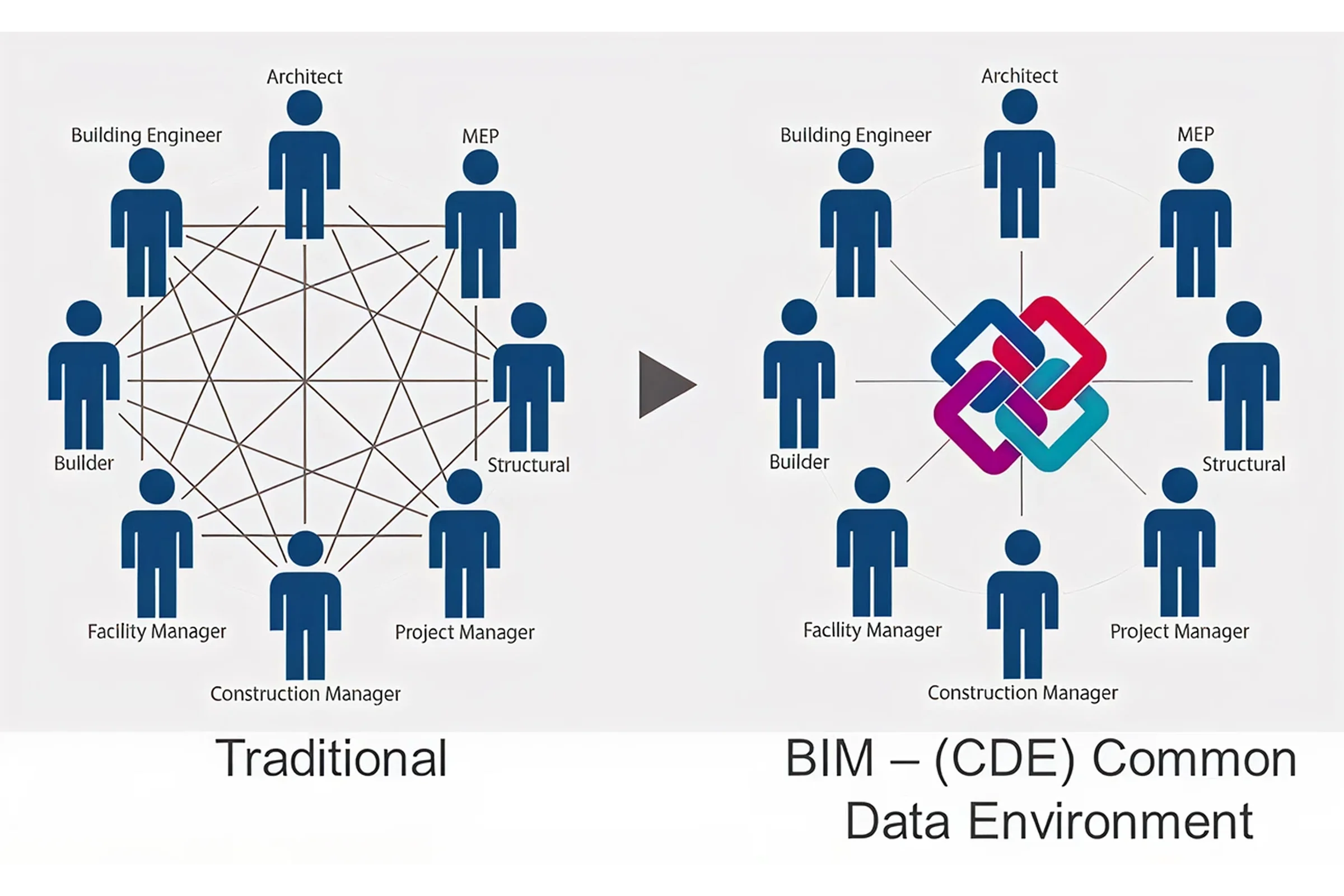
Most construction teams already use tools to communicate and store files. But those tools usually work in isolation.
A drawing might be:
- A drawing revision is shared on WhatsApp.
- emailed for approval
- stored on Drive “for reference”
- printed on site
Each step feels logical on its own. However, when viewed together to try to make sense of the entire picture, they create confusion.
Now add:
- 4–6 stakeholder groups on a project.
- vendors joining and exiting
- consultants revising drawings mid-phase
- RERA expectations for traceable records
Suddenly, no one is sure:
- which drawing is final
- who approved what
- who still has access
- where decisions were recorded
This isn’t just a coordination issue anymore. It becomes a construction data security issue, and for Indian teams, a compliance risk as well.
What Is a Common Data Environment (CDE)?
In simple words, a Common Data Environment is a single, shared space where all project-related information lives.
That includes:
- drawings and revisions
- documents and reports.
- approvals and comments
- communication linked to files
Instead of information being scattered across tools, everything stays connected inside one environment.
A CDE is not just storage. It is a rules-backed structure that defines:
- where files should live
- who can see them
- how revisions are handled
- how approvals are tracked
That’s why CDEs are often discussed alongside construction collaboration tools and document management for construction.
Quick definition:
A CDE is a single source of truth where every project file, revision, comment, and approval is stored, controlled, and accessed based on roles.
How a CDE Is Different from Shared Folders or WhatsApp ?
This is where confusion usually happens.
Many teams assume Google Drive or a shared folder is a CDE. It isn’t.
Here’s the difference:
| Aspect | Shared folders / chats | Common data environment |
|---|---|---|
| File location | Multiple folders & apps | One defined structure |
| Versions | Manually managed | Controlled & sequential |
| Access | Often open | Role-based access |
| Communication | Separate from files | Linked to files |
| Approvals | Email-based | Traceable |
| Audit readiness | Manual effort | Built-in history |
A CDE creates order not by adding rules, but by reducing options.
Why CDEs Matter More in Indian Construction Projects ?

Indian construction rarely involves just one company.
A typical project includes:
- developers
- architects
- structural and MEP consultants
- PMCs
- general contractors
- subcontractors
- vendors
Each group needs access to different information at different stages.
Now layer in:
- RERA compliance expectations
- audits and handovers
- frequent staff and vendor turnover
- multi-site projects
Without a structured environment, access control becomes loose. Old vendors keep files. Consultants download drafts. Site teams work off outdated drawings.
This is why a RERA compliant construction workspace increasingly depends on having a proper CDE.
Not because RERA mandates a specific tool.
But because it expects traceable records, approvals, and accountability.
How Role-Based Access Fits into a CDE ?
One of the most practical aspects of a CDE is role-based access.
Instead of everyone seeing everything:
- contractors see execution drawings
- consultants see design folders
- vendors access only assigned scopes
- internal teams control sensitive documents
This directly improves data security in construction India, where most data leaks happen internally, not through hacking.
Role-based access ensures:
- fewer accidental shares
- cleaner accountability
- quicker access removal when someone exits
And most importantly, it builds confidence that the right people are working on the right information.
A Simple Real-World Example (One Core Scenario)
Consider a mid-size residential project in India. Before a CDE: Most teams start small:
-
- Drawings were shared on WhatsApp and email
- Revisions were named manually
- Vendors saved files locally
- Site engineers printed what they last received
Result:
- two different drawing versions used
- rework on-site
- delays in approvals
- confusion during review meetings
After moving to a structured CDE:
- all drawings lived in one environment
- older versions were locked
- comments stayed attached to files
- access was controlled by role
But mistakes stopped repeating.
That’s the quiet value of a CDE.
Even a single avoided version error can save lakhs in rework and weeks of delay across the lifecycle of a project.
How a CDE Supports Construction Coordination ?
Construction coordination tools work best when everyone refers to the same source.
A CDE supports this by:
- keeping communication tied to documents
- maintaining one current version
- recording who uploaded or approved files
- preserving history even when teams change
This is why modern project collaboration software for construction often centres around the idea of a CDE, even if it doesn’t use that term directly.
It’s about keeping the project’s memory intact.
CDEs and Construction Digitisation in India
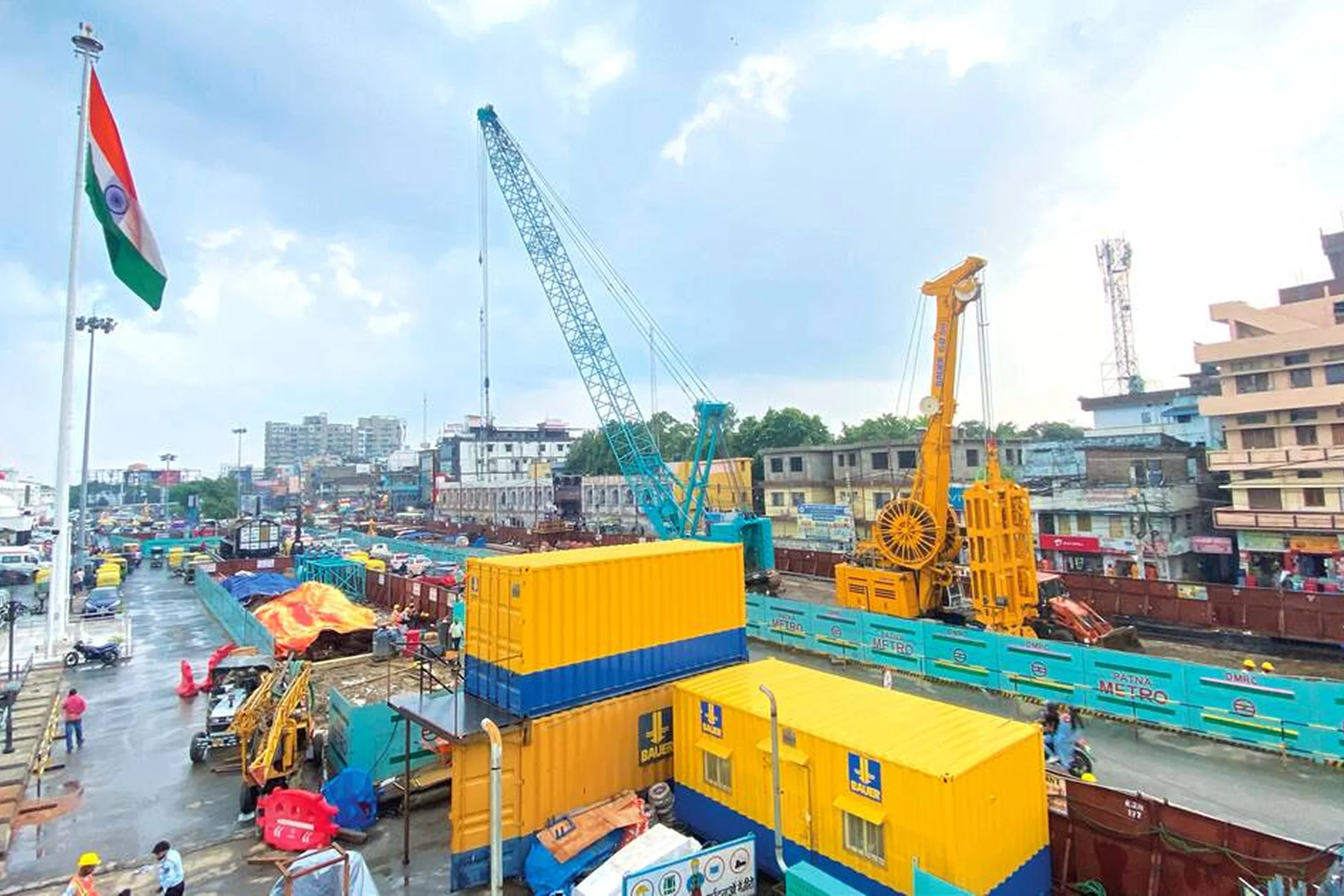
Digital transformation in construction often fails because teams start with tools, not structure. A CDE flips that approach. Instead of asking: “What software should we buy?” Teams ask: “How should information flow?” That mindset supports construction digitisation in India in a practical way. Not through dashboards or buzzwords, but through habits that make everyday work easier. And once structure is in place, tools start making sense.
Is a CDE the Same as a Project Management System?
Not exactly.
Project management tools focus on:
- tasks
- timelines
- reports
A CDE focuses on:
- information
- documents
- communication
- access
In construction, these layers must work together. That’s why teams increasingly look for a construction communication platform that bridges coordination and documentation, without forcing them into heavy ERP systems.
This information layer is where most daily decisions happen.
Most teams already use a project management tool or ERP but crucial decisions still happen in WhatsApp groups and email. The CDE sits exactly in that gap.
When Does a Project Actually Need a CDE?
Not every small project needs a formal setup.
But a CDE becomes valuable when:
- more than one contractor is involved
- drawings change frequently
- approvals need tracking
- compliance matters
- teams rotate
For most Indian builders and contractors, this threshold is reached sooner than expected.
That’s why collaboration software for builders and contractors increasingly includes CDE principles at its core.
How to Start Without Disrupting Ongoing Projects ?
Teams often hesitate because they fear disruption.
But starting small works best:
- begin with one project
- define one folder structure
- onboard core team members
- reduce parallel channels gradually
This way, the CDE supports work instead of interrupting it.
Many teams realise they spend less time answering questions and more time actually building.
Final Thoughts
A Common Data Environment is not about control.
It’s about reducing uncertainty.
When information stays in one place, teams stop guessing.
When access is defined, mistakes reduce.
When history is preserved, projects move forward with fewer disputes.
For Indian construction projects balancing scale, compliance, and coordination, a CDE is no longer optional. It’s becoming the baseline for organised collaboration.
If your projects still depend on WhatsApp, email, and scattered drives, it may be time to test a more structured way of working.
Start a free trial or book a demo with Collabworx to see how construction teams replace ad-hoc communication with a secure, role-based environment that maintains audit trails and project documentation continuity.

 TALK TO US ?